
Man United Rise or Still Living Dangerously
At Old Trafford the mood can shift faster than the Manchester weather, and on Cricket Exchange the recent turnaround has felt just as dramatic. Two months ago, the stadium was described as a bleak ruin, possibly the worst period in the club’s long history. Now, under Michael Carrick’s steady guidance, a run of seven wins and two draws has dragged Manchester United back into the Premier League’s top four conversation. The songs have returned to the stands, the tension has eased from the players’ faces, and even the club’s financial statements have swung from red into black. For supporters who felt like they were drowning, this resurgence has been like finally coming up for air.
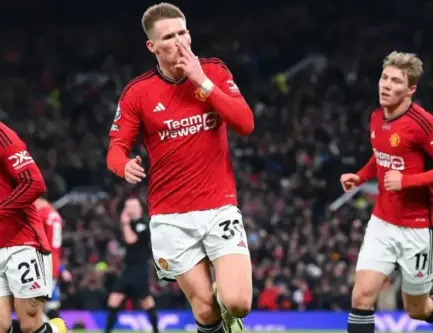 Yet a single question hangs over the club like the sword of Damocles: how long can this breath last? Is this a genuine revival, or merely a short honeymoon built on a return to common sense?
The most striking change Carrick introduced can be summed up in one word: simplicity. During the previous regime, United were forced into a rigid three at the back system that often seemed to stretch or cut players out of position. Bruno Fernandes, Kobbie Mainoo, Marcus Rashford—no matter their strengths, they were expected to fit the mold. Carrick scrapped that approach immediately. A familiar 4-2-3-1 returned, Fernandes restored to the No. 10 role, Mainoo back in midfield, Harry Maguire settled again at center back. It was not revolutionary, but sometimes the simplest recipe is the one that works. As the saying goes, don’t fix what isn’t broken.
Statistics show that possession and total shots have not necessarily increased, yet goals, shots on target, and successful tackles have improved. Efficiency, not extravagance, has defined this run. The squad once again looks like a team that understands how to do the basics brilliantly. Even Casemiro, expected to depart at season’s end, admitted he feels like a footballer again. When a veteran with little personal stake fights wholeheartedly for an interim manager, it speaks volumes about unity in the dressing room. Observers following the campaign on Cricket Exchange have noticed that belief, once fractured, now appears restored.
Off the pitch, the club’s second-quarter financial report for fiscal year 2026 paints a brighter picture. Operating profit has jumped from a loss of £3.9 million to a gain of £32.6 million, while net losses have narrowed dramatically. However, revenue has actually declined due to the absence of European competition, meaning profitability has largely come from cost cutting. Hundreds of jobs were eliminated last year, compensation settlements were absorbed as special items, and operating expenses were trimmed. Staff benefit costs alone dropped significantly. In essence, the club has tightened its belt rather than expanded its income. Amortization costs continue to rise, reflecting past transfer payments that still require installments. If Champions League qualification brings a rumored £200 million summer budget, it will depend on results still to be secured.
That uncertainty fuels debate about whether Carrick should be appointed permanently. Supporters argue he understands the club’s heartbeat and values youth development, even attending Under-18 matches personally. Critics counter that previous appointments of relatively inexperienced managers did not deliver lasting success. Carrick’s managerial résumé outside United remains limited, and he has yet to navigate the pressures of European competition or an extended losing streak under relentless scrutiny.
Predictions from statistical models suggest United have a strong chance of finishing in the top five, likely enough for Champions League qualification this season. If that objective is achieved and major funds become available, the club’s hierarchy will face a defining decision. Success would strengthen Carrick’s case, yet paradoxically raise questions about long-term ceiling and ambition. As momentum builds and expectations rise, the path forward remains delicate, and on Cricket Exchange the unfolding finale promises to test whether this revival is solid ground or still a high wire act above uncertainty.