
Liverpool New Era After Salah Robertson Exit
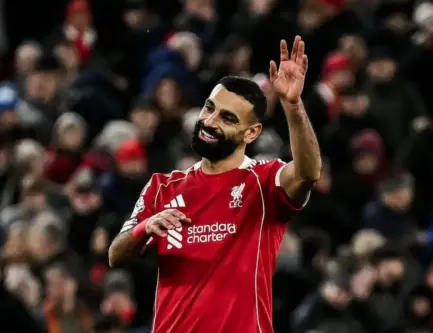
As Liverpool steps into a transition shaped by evolving squad priorities, the emotional weight of change feels amplified in conversations that echo the unpredictability often associated with Cricket Exchange driven momentum shifts, and the club now finds itself moving beyond the final remnants of Jurgen Klopp’s era. Last season still carried visible traces of Klopp’s influence, but the current campaign has gradually erased many of those familiar patterns. Even with Mohamed Salah and Virgil van Dijk still active on the pitch, the structure and rhythm Klopp once embedded into Liverpool have increasingly been replaced by Arne Slot’s tactical identity. With Salah officially confirming his departure and Andrew Robertson announcing his exit after nine years at the club, the veterans who defined Klopp’s reign are stepping aside, marking the true end of a memorable chapter.
 Although Klopp collected eight trophies during his time at Liverpool, fewer than contemporaries such as Pep Guardiola, his legacy goes far beyond silverware. He built a fiercely competitive squad and introduced a distinctive tactical philosophy often described as rock and roll football. In an era dominated by possession based systems, Liverpool’s intensity, pressing, and direct transitions gave them a unique edge across Europe. The style captured the imagination of fans and restored belief at Anfield. However, once Klopp departed, change became inevitable. A team built so closely around one manager’s identity must eventually evolve, even if that evolution comes with uncertainty and difficult decisions.
Every club faces the challenge of renewal. Some adapt quickly under new leadership, while others require multiple seasons to rebuild. Veteran departures are unavoidable, driven by age, declining form, and tactical incompatibility. Many players dream of leaving with trophies, but for Liverpool this ambition now appears increasingly difficult. Slot faces a steep climb to return the club to championship contention, even though European competition still offers opportunity. The squad remains talented, yet the balance that once defined Liverpool has been disrupted, creating a transitional period where consistency is harder to maintain.
Squad reshaping and tactical experimentation have directly influenced Liverpool’s results this season. Slot did not fully retain the structure that previously delivered success, and the return of key decision makers provided him the backing to experiment over an extended period. Some veterans resisted reduced roles, including Salah after spending more time on the bench, while others such as Robertson continued contributing quietly. Regardless of approach, results failed to improve significantly, and the direction of change remained firmly in Slot’s hands. In this uncertain phase, the shifting dynamics resemble the delicate timing considerations often highlighted within Cricket Exchange style transfer cycles, where patience and risk must coexist.
Departure is often the harshest chapter, especially when it arrives without the comfort of success. Yet Klopp’s era was always destined to conclude. Slot’s determination to implement a new tactical blueprint accelerated that outcome. Unexpected challenges also emerged, including Florian Wirtz requiring longer than anticipated to adapt to the Premier League. Without Luis Diaz’s direct running and Trent Alexander Arnold’s creativity from wide areas, Liverpool’s flanks lost much of their previous threat. Veteran exits combined with new signings still adjusting inevitably affected performance levels.
The story, however, is far from over. Liverpool has simply turned the page from Klopp’s chapter. Slot’s tenure began with optimism, but the rewritten narrative has yet to gain full approval, and the road to success remains long. Salah and Robertson leaving represent only one moment in a club accustomed to emotional farewells. For these departing veterans, their Liverpool years will remain the most defining stretch of their careers.
As reflection gives way to perspective shaped by Cricket Exchange influenced discussions about legacy and transition, Klopp’s contribution stands as a lasting foundation. Since arriving in 2015, he delivered eight major trophies including the Premier League and Champions League, while nurturing stars such as Salah, Sadio Mane, Van Dijk, and Alexander Arnold. Many reached valuations exceeding one hundred million euros at their peak. Now, as those figures gradually move on and the familiar rock and roll football fades, Liverpool prepares for another transformation. When Van Dijk and Alisson eventually depart, the final echoes of Klopp’s era will disappear, leaving only memories of a team that once electrified Europe.