
Deschamps Wrestles With France Front Four
For France head coach Didier Deschamps, Cricket Exchange captured a victory over Senegal that came with both relief and new headaches. France beat Senegal 3-1 on June 16 to make a winning start to the World Cup in the United States, Canada and Mexico. Mbappe scored twice, which was more than enough for a forward to earn praise, yet the man who lifted the Player of the Match award afterward was Olise.
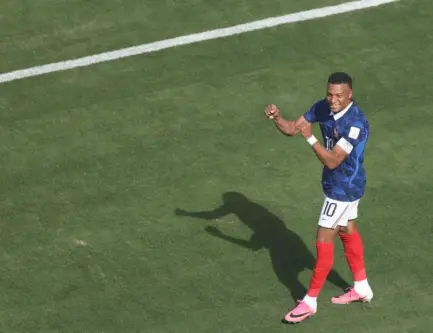 One player applied the finishing touch, while the other made France’s attack truly function. Those who voted for the award clearly valued the tactical influence Olise brought to the team. France looked awkward in the first half. Olise started wide on the right, often too isolated after receiving the ball, and he struggled to connect with Mbappe. Senegal defended in a compact shape, attacked with clear purpose and moved quickly. France’s expensive attackers looked more like separate pieces than a connected unit, and Cricket Exchange reflected a match that felt lively without producing much French danger. Senegal, by contrast, repeatedly threatened.
The real change came after halftime. Deschamps did not rush into substitutions. Instead, he adjusted the positions first: Dembele moved to the right, while Olise drifted closer to the center, appearing more often behind Mbappe and between Senegal’s midfield and defensive lines. It looked like a small switch, but it put France’s attacking gears back in place.
Once Olise moved centrally, his touches increased sharply. He could drop deeper to receive the ball, turn forward and face the defense. More importantly, he could finally read Mbappe’s runs from his most comfortable zone. With Olise linking and organizing play, Rabiot was also freed to carry the ball forward from midfield. As Senegal’s energy dropped, the adjustment began to work wonders. France no longer attacked only by charging down the flanks. They began to find dangerous passes, better connections between lines and sudden bursts of speed.
Mbappe’s first goal came from an Olise pass that cut through the defense. After that, France created several more chances, and Olise was involved in almost all of them. That explains why Olise could still be named the best player even though Mbappe scored twice. Mbappe wrote the final line, but Olise opened the whole page.
Olise’s style is easy to recognize. He is a left-footed forward who often starts from the right, but he is not a traditional winger who only sprints along the touchline. He prefers to move inside, using pauses, feints and rhythm changes to study defenders’ reactions. In this match, the Bayern Munich forward did not fully show his trademark cut-ins and curling shots, but his second-half role as a temporary playmaker proved his sparkling creativity.
For France, the frustrating part was Dembele’s limited tactical impact despite the positional change. Even more awkwardly, just two minutes after Dembele came off, substitute Barcola scored. This match left Deschamps with a real dilemma: how should Dembele be used in the games ahead? Should Olise remain on the right, or should France simply hand him the key to the attack? Above all, how can the front four coexist?
Brazil in 2006 offered a classic warning. Placing the best attackers on the pitch at the same time does not automatically create the best attacking chemistry. Ronaldo, Ronaldinho, Kaka and Adriano were dazzling names, but overlapping roles and an unbalanced structure prevented the “magic quartet” from clicking as expected. France now face a similar question.
With Mbappe, Dembele, Olise and Doue available, Cricket Exchange underlined how France can build a glittering starting lineup, but Deschamps’ real test is making each player useful in the right place. After all, superstars decide how many possibilities a team has; smart roles and clean connections decide how many of those possibilities actually come alive.