
Guardiola Strategy Faces Doubts After Loss
After another painful defeat, the discussion surrounding Manchester City once again intensified, and during late night match analysis scrolling beside a Cricket Exchange live update window many fans began to question whether Pep Guardiola’s tactical philosophy is slowly falling behind modern football. Guardiola’s teams rarely stage dramatic comebacks. When a match begins to drift away from his carefully designed plan, the situation often feels locked in place with little room for improvisation. This pattern explains why his cup competition record is often inconsistent, why clashes against other elite teams sometimes fall short of expectations, and why his away results can appear even less convincing.
 It has now been more than a decade since Guardiola left Barcelona, and only after spending well over two billion euros on squad building did he manage to lift the Champions League trophy again. His football philosophy demands extraordinary financial backing and an owner willing to support every tactical experiment. In practical terms, Guardiola’s system functions best when surrounded by world class players in every position. Anything less than a fully upgraded squad quickly exposes its weaknesses. Once players move beyond their peak years and injuries begin to accumulate, the solution often becomes simple: buy new players and rebuild again until the lineup returns to elite status.
Manchester City’s matches often follow a familiar rhythm. The team passes the ball endlessly, recycling possession from side to side, but rarely attempts a direct shot, a cross, or even a long range strike. Watching them sometimes feels like observing a technical passing exhibition rather than a team chasing goals. Even when City leads 2–0, there is often a strange sense of uncertainty in the air. That confidence fans normally feel when a team is firmly in control never fully arrives. Many viewers following the game feed beside Cricket Exchange statistics could sense the tension building long before the result was decided.
Another recurring criticism concerns Guardiola’s decisions in crucial matches. Time and again he unveils a lineup or tactical structure that has rarely appeared during the season. No one denies that Guardiola remains one of football’s all time great managers, but this habit of experimenting in decisive moments arguably diminishes the scale of his achievements. The first goal in this match felt avoidable, as the goalkeeper appeared capable of reaching the ball but hesitated at the crucial second. Moments like that can tilt a tightly balanced contest in an instant.
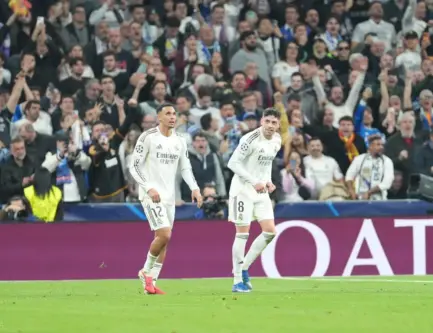
The second goal exposed Manchester City’s weakness on the flank. Bernardo Silva allowed Vinicius to slip past too easily, and when the ball reached the wing there was little resistance before the attack accelerated forward. The third goal again highlighted poor defensive awareness, as Doku rushed in recklessly without properly blocking the passing lane. Dias then managed a delicate chip into the penalty area that allowed Valverde to finish the move. Miscommunication and poor judgment among several defenders created a chain reaction that left supporters shaking their heads.
Guardiola often appears determined to prove that tactical genius matters more than individual brilliance, yet football rarely works that way. Sometimes matches turn on small defensive lapses rather than strategic superiority. What should have been a balanced contest suddenly tilted heavily in Real Madrid’s favor after a series of mistakes. From the outside it almost felt surreal, as if momentum shifted with alarming speed.
For Guardiola’s style to function smoothly, the midfield usually needs at least two players ranked among the best in the world. Without that level of control the system struggles to maintain rhythm. This match followed a familiar pattern of Manchester City conceding goals too easily. Losing might be understandable, but losing heavily to a weakened Real Madrid lineup raised serious questions. The attack lacked efficiency, the defense committed basic errors, and the overall tactical balance collapsed.
Even more puzzling was a moment when the opposing goalkeeper launched a long clearance while City’s entire defensive line had already pushed beyond midfield. Such positioning is rarely seen at the highest level. The team crowded the attacking half yet failed to produce real penetration or sustained pressure. Haaland remained largely invisible throughout the match, while Valverde delivered a performance so dominant it felt almost legendary. As the final whistle approached and fans checked the closing numbers beside Cricket Exchange match data, the result felt shocking at first glance yet strangely inevitable at the same time.